
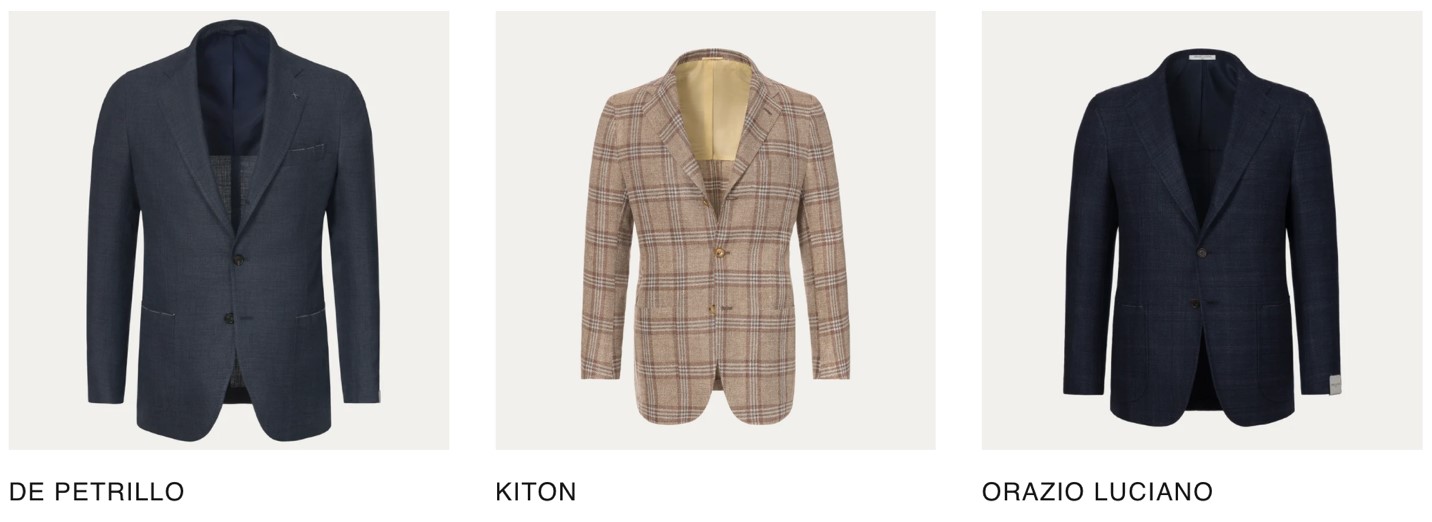
An Italian jacket can be remarkably comfortable without looking casual. Much of that balance comes from decisions made before the garment is assembled, including how the shoulders are shaped, how much structure supports the chest, and how the fabric responds to movement. Two jackets in the same size may feel entirely different because their construction and proportions follow different tailoring principles. Understanding these differences makes choosing a suit or jacket considerably easier.
Italian tailoring is not a single, uniform style. Neapolitan makers are often associated with softer construction and natural shoulders, while the tailoring traditions of Milan and Rome include more structured approaches. Individual manufacturers interpret these influences differently, and many combine techniques according to the intended garment. Buyers exploring Italian men’s suits and jackets should therefore consider the characteristics of each piece rather than assuming that its country of origin determines its fit or construction.
The most suitable jacket is not necessarily the most expensive or the most elaborate. A lightly structured sport coat may be ideal for everyday use, while a more formal business suit requires a different balance of shape and restraint. Fabric, construction, and fit must work together to serve the intended purpose. Evaluating each element separately helps explain why certain garments feel immediately comfortable and others remain difficult to wear despite careful alterations.
Understanding the Structure of an Italian Jacket
The shoulder is one of the most recognizable elements of tailored clothing. A softly constructed shoulder follows the body’s natural contours and can create a relaxed appearance. More structured designs use padding and internal components to establish a defined silhouette. The difference is not simply decorative, since shoulder construction influences how the jacket hangs and moves.
Neapolitan tailoring is frequently associated with minimal shoulder padding and a relatively soft chest. Some jackets feature a shirt-style sleeve attachment, often described by the Italian term spalla camicia. This construction can produce subtle folds around the sleeve head, depending on the fabric and the way it is assembled. These details contribute to a particular aesthetic, but they are not universal requirements of Neapolitan tailoring.
More structured jackets can create a stronger shoulder line and a clearly defined chest. They may suit formal business settings or wearers who prefer a sharper silhouette. Structure can also affect how the garment maintains its shape, although the quality of materials and execution remains important. A soft jacket is not necessarily less sophisticated, just as a structured jacket is not automatically more durable.
The internal canvas is another significant component. In traditional tailored construction, a layer of material between the outer fabric and the lining helps support the front of the jacket. Full-canvas construction extends this support through much of the front, while half-canvas designs concentrate it in the upper portion. Fused jackets use adhesive interlining to create structure, reducing some of the labor involved in assembly.
These methods have different production requirements, but construction labels alone do not establish overall quality. A well-designed fused jacket can perform reliably, while a full-canvas jacket with unsuitable proportions may never fit comfortably. The behavior of the garment on the body is more informative than any isolated technical specification.
Lining also affects comfort. A fully lined jacket can make layering easier and provide a smooth interior, while partially lined or unlined designs may feel lighter. However, breathability depends on the entire garment, including the outer fabric and internal materials. Removing lining does not automatically make a jacket suitable for hot weather.
Finding the Right Silhouette and Proportions
Fit begins at the shoulders because this area is difficult to alter substantially. The shoulder seam should sit appropriately relative to the natural shoulder, allowing for the intended style of construction. A soft jacket may follow the shoulder more closely, while a structured design can extend slightly beyond it. What matters is whether the resulting silhouette looks balanced and permits comfortable movement.
The chest should provide enough room for the jacket to close without excessive tension. When the main button is fastened, prominent horizontal pulling or severe distortion around the lapels may indicate that the garment is too tight. Excessive fabric gathering beneath the arms or across the back can suggest the opposite problem. Some folds are unavoidable during movement, so fit should be assessed in a natural standing position rather than by expecting completely smooth fabric at every moment.
Jacket length influences the apparent proportions of the body. A shorter design can make the legs appear longer, while additional length may create a more balanced silhouette for certain body types. The appropriate measurement depends on the jacket’s style, the wearer’s build, and the trousers with which it will be worn. Rigid rules based on a single body measurement are less useful than examining the complete outfit.
Button placement and lapel proportions also affect visual balance. A higher buttoning point can emphasize the upper torso, while a lower position changes the relationship between the chest and waist. Lapel width should be considered alongside shoulder width and overall jacket size. An extremely narrow lapel on a broad jacket, for example, may create proportions that appear inconsistent.
Trying on a jacket requires more than standing still in front of a mirror. The wearer should sit down, raise the arms moderately, and move naturally. Tailored clothing is not intended to provide the unrestricted movement of sportswear, but ordinary activities should remain comfortable. A jacket that looks impressive only when the wearer remains motionless is unlikely to become a practical favorite.
Alterations can refine a good fit. Sleeve length, modest waist shaping, and certain adjustments to the jacket body are common possibilities. Changing the shoulders, significantly altering the chest, or correcting fundamental balance problems can require extensive work. Selecting a garment with suitable proportions from the beginning is usually more economical.
Choosing Fabrics for Climate and Occasion
Wool remains one of the most versatile materials for Italian tailoring. Its performance varies according to fiber characteristics, yarn structure, weave, and fabric weight. Smooth worsted wool can produce a refined appearance suitable for business suits, while flannel offers a softer surface and a more relaxed character. Textured wool fabrics can also work particularly well in separate jackets intended for combinations with different trousers.
Lightweight wool is often useful in warmer conditions, but fabric weight should not be considered in isolation. A tightly woven material can feel less breathable than a more open construction of similar weight. Jacket lining, internal structure, and the fit of the garment also influence comfort. Buyers should evaluate the complete design rather than relying solely on a numerical fabric specification.
Linen offers a different approach to warm-weather tailoring. Its characteristic creasing gives garments a relaxed appearance that works particularly well in casual jackets and summer suits. A linen jacket that develops folds around the elbows and waist is not necessarily demonstrating poor quality. These changes are part of the material’s behavior, although the extent of creasing depends on fabric construction and finishing.
Cotton tailoring can provide useful alternatives for less formal settings. Cotton twill, for example, often produces a substantial appearance suitable for casual jackets and trousers. However, cotton fabrics can retain creases differently from wool, and some may feel less adaptable to movement. The choice should reflect how the garment will be worn rather than a preference for natural fibers alone.
Blended fabrics introduce additional possibilities. Wool and silk combinations may offer distinctive surface texture and drape, while wool and linen blends can balance characteristics of the individual fibers. Cashmere may contribute softness to selected fabrics, although its presence does not guarantee superior durability. The percentage of each fiber is only one factor among many.
A practical fabric assessment should include several considerations.
- Climate suitability. The material and garment construction should provide appropriate comfort for expected temperatures.
- Fabric weight. The cloth should have enough substance to support the intended silhouette without unnecessary bulk.
- Drape. The material should fall naturally and complement the jacket’s construction.
- Surface texture. Smooth fabrics generally support more formal combinations, while textured materials often suit relaxed tailoring.
- Crease behavior. The fabric’s response to sitting, travel, and repeated movement should match the wearer’s expectations.
- Maintenance. Cleaning requirements and resistance to everyday wear should be considered before purchasing.
An attractive fabric sample cannot reveal every aspect of the finished garment. Its behavior changes when cut, shaped, supported by internal materials, and assembled into a jacket. Trying on the completed piece remains essential whenever possible.
Deciding Between a Suit and a Separate Jacket
A suit provides a coordinated appearance because the jacket and trousers are made from matching fabric. This creates visual continuity and generally makes a suit appropriate for formal business environments, professional occasions, and events with established dress expectations. The exact degree of formality depends on color, pattern, fabric, and styling.
Navy and charcoal remain useful choices for business suits because they work with a variety of shirts and footwear. A medium-gray suit can offer additional flexibility, particularly in professional settings that do not demand the most formal appearance. Fabric texture matters as well. Smooth worsted wool generally looks more formal than pronounced flannel or loosely woven materials.
Separate jackets serve a different purpose. A sport coat can introduce texture, color, and a less rigid silhouette without requiring matching trousers. Navy hopsack, brown textured wool, and selected checked fabrics can provide practical options for business-casual wardrobes. Their usefulness depends on whether the material and design are compatible with trousers already owned.
The distinction between a suit jacket and a sport coat is important. A formal suit jacket may look awkward when worn with denim because its smooth fabric and structured silhouette contrast with the casual character of the trousers. Some suits, particularly those made from textured or relaxed fabrics, allow more flexibility. Nevertheless, purchasing a suit with the expectation of routinely wearing the jacket separately deserves careful consideration.
A separate jacket should also be evaluated for its relationship with trousers. Strong contrast can work well when the fabrics have compatible levels of formality and texture. A softly tailored brown jacket may complement gray wool trousers, while a casual linen jacket may look more natural with cotton or linen trousers. Combining garments successfully involves more than matching their colors.
For someone who rarely attends formal events, a versatile sport coat may receive substantially more use than a second suit. Conversely, a professional who wears tailoring almost every working day may benefit from several suits in different weights and colors. The appropriate purchasing decision follows actual requirements.
Inspecting Quality Before Purchasing
Brand reputation provides context, but individual garments still deserve careful inspection. Italian manufacturers employ different production methods, and even pieces from the same collection may vary in construction. Examining the garment helps determine whether its workmanship and materials justify the asking price.
The jacket should hang naturally when worn. The lapels should lie appropriately against the chest, the collar should sit comfortably at the neck, and the front should close without severe distortion. Minor asymmetry is common because human bodies are not perfectly symmetrical. More pronounced problems may indicate unsuitable proportions or a garment balance issue.
Internal finishing offers useful information about workmanship. Seams should be secure, the lining should permit comfortable movement, and pocket construction should feel appropriate for the garment. Buttonholes and buttons should be neatly finished and securely attached. Pattern alignment is worth examining on checked and striped fabrics, particularly at prominent seams.
Hand stitching is often associated with premium tailoring, but its value depends on execution and purpose. Decorative stitching should not be confused with structural work that contributes to flexibility or shape. Machine construction can provide excellent strength and consistency. The combination of good design, appropriate materials, and precise assembly matters more than the number of hand-finished details.
Trousers require equal care. The waistband should remain comfortable when sitting, the seat should allow movement, and the fabric should fall cleanly through the leg. Trouser rise influences the relationship between jacket length and the visible proportions of the outfit. A well-fitted jacket cannot compensate for trousers that are uncomfortable or visually unbalanced.
Before committing to an expensive purchase, buyers should also understand the available alteration options. Some retailers provide tailoring services or recommendations, but the scope and cost of adjustments can vary. A garment requiring only minor corrections is generally a safer choice than one that needs fundamental reconstruction.
Caring for Italian Tailoring
Quality tailoring benefits from maintenance that respects its materials and construction. Wool jackets do not necessarily require professional cleaning after every wear. Allowing garments to air, brushing away surface dust, and dealing promptly with stains may reduce unnecessary cleaning. The manufacturer’s care instructions should determine the appropriate treatment.
Proper storage helps jackets retain their shape. A hanger with adequately supported shoulders is generally preferable to a thin wire hanger that concentrates pressure in a narrow area. Jackets should have enough space to hang without being compressed against other clothing. Prolonged exposure to moisture or unsuitable storage conditions can damage both fabric and internal components.
Rotating garments also allows time for wrinkles and moisture from normal wear to dissipate. A frequently worn suit may benefit from having an alternative available, particularly during demanding working weeks. This is not a guarantee of longer service life, but reasonable rotation can reduce continuous wear on the same garment.
Repairs should be addressed before minor problems become serious. Loose buttons, damaged seams, and worn trouser hems are often manageable when treated promptly. More extensive damage to delicate fabrics or internal construction can be expensive to correct. Maintenance costs should therefore form part of the purchasing decision, especially for garments made from unusual or particularly fine materials.
The goal is not to keep every jacket looking untouched. Natural changes in the fabric and the gradual softening of a garment can contribute to its character. What matters is preserving its shape, comfort, and structural integrity.
Choosing Tailoring That Suits the Wearer
Italian tailoring offers considerable variety, from relaxed jackets with natural shoulders to precisely structured business suits. The differences reflect decisions about silhouette, construction, fabric, and intended use. Understanding these choices allows buyers to evaluate garments according to their own requirements rather than relying entirely on a manufacturer’s reputation.
An appropriate jacket should complement the wearer’s proportions, remain comfortable during ordinary movement, and work with the rest of the wardrobe. A suit should also meet the expectations of the occasions for which it is purchased. These requirements may seem straightforward, but they are more reliable indicators of a successful purchase than decorative details or elaborate production descriptions.
The most convincing expression of good tailoring is a garment that looks balanced without demanding constant adjustment. Its fabric behaves as expected, its construction supports the intended shape, and its proportions feel natural on the body. When these elements work together, Italian suits and jackets can provide lasting comfort and refinement without sacrificing practicality.