
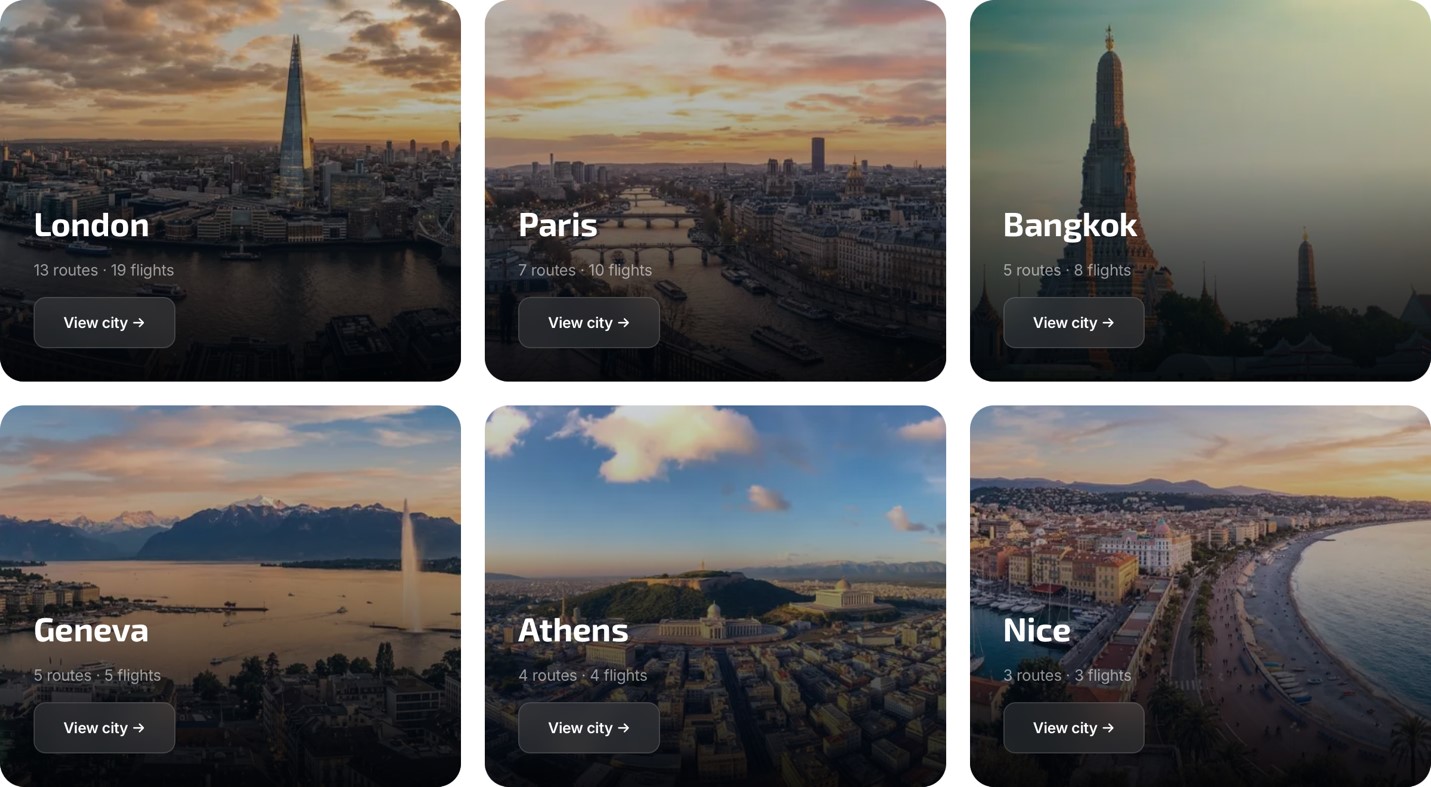
A business meeting in Geneva, a family holiday on the French Riviera or a weekend in the Austrian Alps may require very different travel arrangements. Scheduled airlines offer extensive European networks, but their timetables and airport choices do not always suit an individual itinerary. Private aviation provides an alternative for travellers who need greater control over departure times, destinations and the people accompanying them. However, chartering an aircraft involves more than selecting a convenient flight. Understanding how the service operates, what determines its price and which arrangements need to be made beforehand can prevent unnecessary expenditure and complications.
Travellers exploring private jet charter services (https://rentjet.eu/) can request aircraft options based on their preferred route, travel dates and passenger numbers. Unlike purchasing an airline ticket, chartering normally means hiring an entire aircraft, including its crew, for an agreed journey. The operator and charter provider coordinate the flight arrangements, while passengers specify their requirements within operational and regulatory limits. This flexibility can be particularly useful for journeys involving several destinations or locations that are poorly connected by scheduled services.
The advantages are not limited to saving time in the air. Choosing a smaller airport closer to the destination may substantially reduce the overall journey, especially when the alternative involves connecting flights or lengthy transfers. Private terminals can also offer a more discreet departure experience, although security, immigration and customs procedures still apply. For business travellers, the cabin provides a setting in which colleagues can work together without unrelated passengers nearby. Families may value the ability to travel as a group, carry suitable luggage and arrange departure times around their own commitments.
Choosing the Right Aircraft and Airport
The aircraft should be selected according to the journey rather than its appearance or reputation. A short flight between London and Paris has different requirements from a journey between Zurich and Lisbon. Passenger numbers, baggage volume, flight distance and expected weather conditions all influence which aircraft are suitable. A smaller jet may offer an economical solution for a short European sector, while a larger aircraft can provide additional cabin space, greater range and more luggage capacity. The number of advertised seats is not always the only consideration, as payload and operating conditions can affect the practical capacity of an individual flight.
European charter aircraft are generally grouped into several categories, each designed for different operational needs.
- Very light and light jets are commonly considered for short European journeys with relatively small groups. Their compact size can provide access to airports unsuitable for larger aircraft, subject to local restrictions.
- Midsize jets offer additional cabin space and luggage capacity, making them suitable for groups requiring greater comfort or longer flight sectors.
- Super-midsize jets combine extended range with larger cabins and can be appropriate for longer European routes or journeys involving more passengers.
- Heavy jets provide substantial cabin space and long-range capability, although their higher operating costs may be difficult to justify for shorter flights.
Airport selection deserves just as much consideration as aircraft size. London, for example, offers several possibilities for business aviation, including Farnborough, Biggin Hill and Luton. Paris Le Bourget is another established business aviation airport, while Milan Linate can be convenient for travellers whose destination is central Milan. Choosing the nearest airport is not necessarily the best decision, however. Aircraft availability, airport charges, opening hours, runway requirements and ground transport arrangements may favour another departure point.
A useful comparison therefore considers the entire journey from the passenger’s starting address to the final destination. A flight departing from an airport farther away could still prove more convenient if it offers suitable facilities and avoids operational delays. Charter providers can assess these factors before presenting an itinerary, allowing passengers to compare practical alternatives rather than simply choosing familiar airport names.
Understanding the Booking Process
A private charter begins with a travel request rather than a fixed airline schedule. The passenger supplies the departure and arrival locations, preferred dates, number of travellers and any requirements that could influence aircraft selection. These might include unusually large luggage, sporting equipment, pets or the need for particular cabin facilities. Providing accurate details from the outset helps avoid quotations based on aircraft that cannot accommodate the intended journey. Flexibility over departure times or nearby airports may also increase the number of available options.
The charter provider then examines suitable aircraft operated by its own organisation or by partner operators, depending on its business model. This distinction is worth understanding because the company arranging a booking is not necessarily the airline operating the flight. The actual operator is responsible for conducting the service under the applicable aviation regulations and operating permissions. Before confirming a booking, passengers should know which operator will perform the journey and receive clear information about the proposed aircraft.
A quotation should identify the aircraft category, itinerary, passenger capacity and services included in the agreed price. It should also explain payment requirements, cancellation conditions and any circumstances in which additional charges could arise. Not every quotation covers the same services, so comparing two offers solely by their headline prices may be misleading. A slightly higher initial price could represent better value if it includes airport handling, suitable luggage capacity or services charged separately elsewhere.
Once the proposal is accepted, the provider coordinates the operational arrangements with the aircraft operator. Passenger information, airport handling, catering preferences and ground transport requirements are normally confirmed before departure. Travellers should receive clear instructions about the terminal, arrival time and relevant documentation. Unlike scheduled airline bookings, charter arrangements may be highly individual, making written confirmation of the agreed details particularly valuable.
What Determines the Cost of a Private Flight
Private aviation pricing reflects the cost of operating an aircraft rather than the sale of individual seats. Flight duration is a major factor, but two journeys covering similar distances can have noticeably different prices. Aircraft type, airport charges, crew requirements, fuel costs and the location of the available aircraft all influence the quotation. Seasonal demand may also affect availability, particularly around major sporting events, international exhibitions and popular holiday periods. The most suitable aircraft is therefore not necessarily the cheapest one advertised.
Aircraft positioning can have a substantial effect on the final price. If a jet is already based at the requested departure airport, the operator may be able to avoid an additional flight to collect the passengers. If the aircraft must travel from another location, that movement may be reflected in the charter cost. Similar considerations apply after the passengers have reached their destination, as the aircraft may need to return to its base or reposition for another assignment.
This aspect of charter operations also explains the existence of empty leg flights. When an aircraft has to travel without paying passengers between assignments, the operator may offer that sector at a reduced price. Such opportunities can provide worthwhile savings for travellers whose plans match the aircraft’s route and departure window. They are less appropriate for journeys requiring guaranteed timings, because availability may depend on the original charter arrangements. Any comparison should also consider the conditions attached to the discounted flight.
Group size is another important element in assessing value. A private aircraft normally has an agreed charter price for the journey, rather than a separate standard fare for every passenger. When several colleagues or family members travel together, sharing the total cost can change the comparison with premium scheduled air travel. This does not automatically make private aviation cheaper, particularly for short routes served by frequent commercial flights. The financial case is strongest when flexibility, access to a particular airport or the ability to complete a demanding itinerary produces a measurable benefit.
Passengers should ask for an itemised explanation of what is included, even when a provider describes its quotation as all-inclusive. Additional ground transport, specialist catering, overnight aircraft parking or changes to the agreed itinerary may have financial implications. Currency, applicable taxes and cancellation provisions should also be understood before payment. Clear contractual terms are more useful than an attractive starting price that leaves important costs uncertain.
Preparing for a Smooth Departure
Private aviation offers flexibility, but it does not remove the legal and practical requirements of international travel. Passengers must carry appropriate identification and meet the entry requirements of their destination, including any applicable visa conditions. Operators may require passenger details in advance to complete regulatory and security procedures. Travellers should check these requirements early, especially when visiting several countries during the same journey. A private terminal does not exempt passengers from border controls.
Luggage arrangements also require advance planning. Smaller aircraft may have less storage space than travellers expect, even when the cabin appears comfortable. Golf equipment, skis, musical instruments and bulky suitcases should be declared before the aircraft is confirmed. Pets may also be accommodated on suitable flights, but their transport can involve documentation, animal health rules and operator-specific conditions. Leaving these matters until departure risks last-minute difficulties.
Arrival times at private terminals can be considerably shorter than those recommended for scheduled international flights, although the exact requirement depends on the airport, destination and operator. Passengers should follow the instructions issued for their particular flight rather than assume a universal check-in period. Ground transfers should be coordinated with the actual arrival airport, not merely the destination city. In locations served by several airports, this distinction can save considerable travelling time.
Weather and air traffic restrictions remain relevant regardless of the aircraft’s size or the flexibility of the booking. Some smaller airports operate within limited hours, while others impose noise restrictions or require advance permission. Air traffic congestion, poor visibility or technical considerations may necessitate changes to the planned schedule. A reliable charter arrangement should therefore include clear communication about operational constraints and the available alternatives.
Private jet travel makes the most sense when the aircraft, airport and schedule are selected around a genuine travel requirement. Its value cannot be judged by luxury alone, nor by comparing flight times without considering transfers, connections and the full cost of the journey. Travellers who establish their priorities, examine quotations carefully and clarify operating conditions are better placed to decide whether a charter is justified. For the right itinerary, private aviation can offer a practical way to connect European destinations while giving passengers greater control over how their journey is organised.